Upcycling the Data Center: Doing More AI With Older Hardware
We throw away a staggering amount of perfectly useful compute. Here is why a lot of AI and cloud work can run on older, upcycled hardware, and where it honestly cannot.

We throw away a staggering amount of perfectly useful compute. Here is why a lot of AI and cloud work can run on older, upcycled hardware, and where it honestly cannot.
We ship megabytes of script to display a paragraph of text, and we call it progress. I think we forgot that efficiency was ever a virtue.
Free AI is not a gift. Someone pays for every query, in energy, in data, in dependency. Here is who, and why I'd rather pay honestly for compute I control
We chose to run our own AI infrastructure instead of building on closed APIs. Here is the case for owning your stack, and the honest cost of doing it.
I am convinced the future of useful AI is small, efficient, often task-specific models, not an endless race for the biggest one. Quality per watt beats brute force.
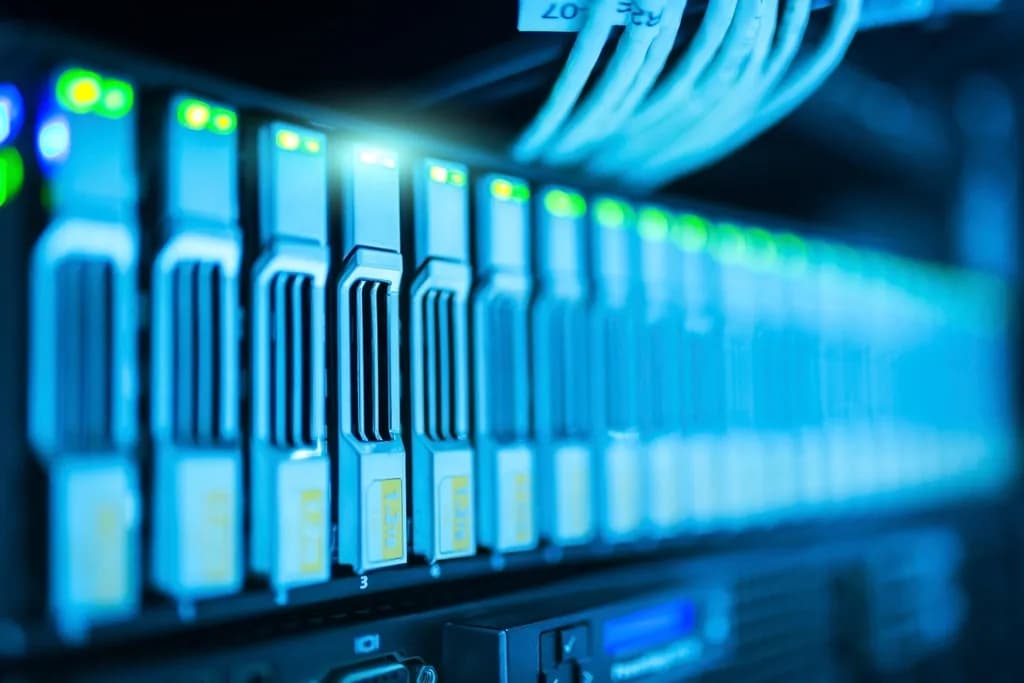
Walk through any data center decommission and tell me you do not flinch. Pallets of servers, racked and humming a month ago, now bound for a shredder because a spreadsheet says their depreciation window closed. The disks still spin. The chips still compute. Nothing is broken. We are throwing it away because it is no longer NEW.
That is the part that drives me mad.
We have convinced ourselves that progress means buying the latest silicon every few years and feeding the old gear into the grinder. And the timing could not be worse, because the industry is in the middle of an AI buildout that treats hardware like a consumable. So I want to make the case I keep making to anyone who will sit still for it: a large share of the AI and cloud work we do every day does not need the newest accelerator. It needs hardware that works. And we are surrounded by hardware that works.
Here is the number that should stop you. In 2022 the world generated 62 million tonnes of electronic waste, and less than a quarter of it, 22.3 percent, was documented as properly collected and recycled. The rest leaked into landfills, informal burn sites, and storage closets. That figure is from the UN Global E-waste Monitor 2024, and the same report projects we hit 82 million tonnes by 2030. E-waste is the fastest-growing waste stream we produce, and it is rising five times faster than our ability to recycle it.
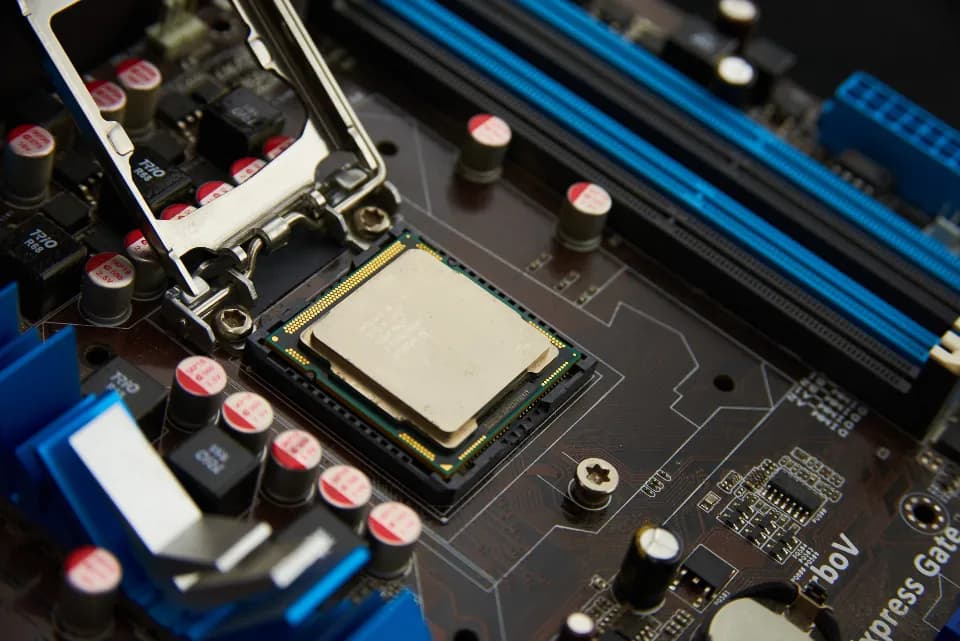
Data center gear is a slice of that pile, but it is a rich slice. Gold, copper, rare earths, and the enormous embodied energy it took to manufacture a server in the first place. When you scrap a working machine, you do not just lose the machine. You burn the carbon and the mining and the water it took to build it, and then you do it all again for the replacement. The manufacturing is the quiet half of the bill nobody puts on the slide. A chip does not start clean the day you rack it. It arrives already in carbon debt, and the only way to pay that debt down is to use the thing for a long time.
And why do we cut that short? Often for a refresh cycle. Three years, four, five. A number on a depreciation schedule, not a verdict on whether the machine can still do its job.
Here is the part the hyperscalers already figured out, even if the rest of us did not notice.
For years the standard server refresh sat around three years, then crept to five. Then the biggest operators on Earth looked at their own books and extended it further. Alphabet stretched the useful life of its servers and, by its own accounting, by doing so. Microsoft pushed its lifespan from four years to six. These are companies with the deepest pockets in computing, and their conclusion was not buy more, faster. It was keep it longer, it still works.
Years of building infrastructure taught me that trust is earned quietly, honesty about limits beats big promises, and locking people in is a slow death.
Sit with that. The organizations most able to afford constant replacement decided constant replacement was waste. They did it for the money, sure. Don't get me wrong, money is the language that moved them. But the environmental win rides along for free, and it is not small.
If the lifecycle math works at Google scale, it works at ours. The hard part is not the hardware. It is the habit.
So let me draw the line I always draw, because I am not here to tell you old gear does everything. It does not. But the gap between what people assume needs new silicon and what does is enormous.
A huge fraction of cloud work is not compute-bound at all. Web servers, databases, API backends, queues, caches, CI runners, internal tools, the unglamorous machinery that runs a business. A five-year-old Xeon serves an API just as correctly as the chip that shipped last quarter. The user on the other end cannot tell, and the electricity bill can be lower if you size it right.
And AI? This is where the assumption is loudest and the reality is most interesting. Training a frontier model from scratch is one workload. Running models is a completely different one. Inference on quantized open-weight models, fine-tuning smaller models, embedding and retrieval pipelines, batch jobs that are not racing a clock, all of this runs on previous-generation accelerators and, for plenty of cases, on capable CPUs. The model does not know it is being served by a card that is three years old. It just answers.
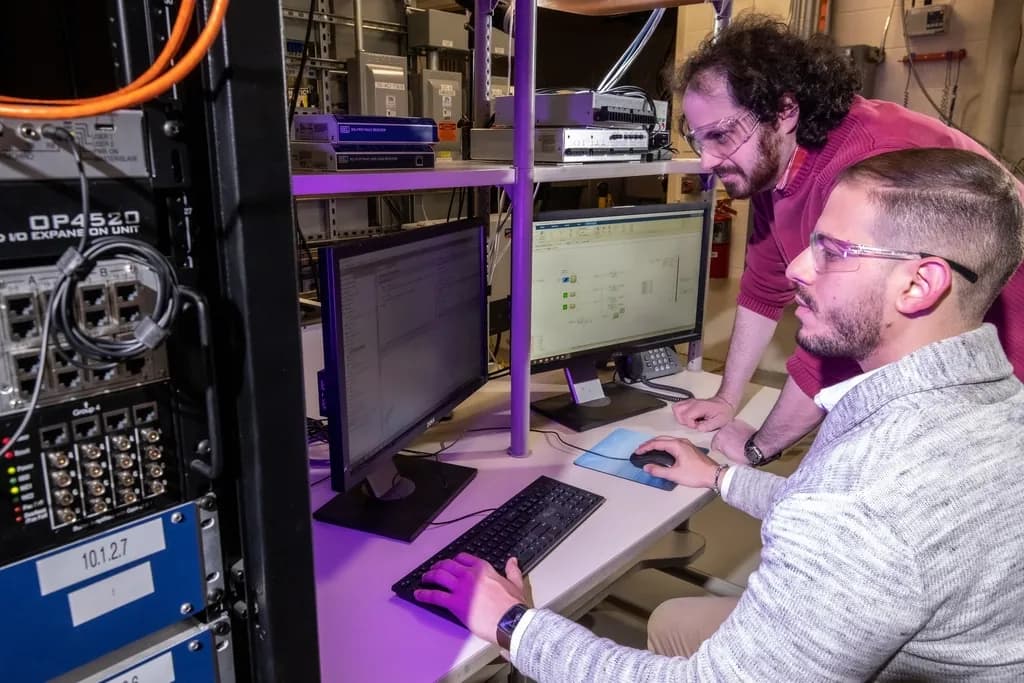
That is what I am exploring at Carpathian. We build and run our own infrastructure rather than renting someone else's, which means the lifecycle decision is ours to make, not a vendor's to make for us. I am spending serious time on how far efficient, lower-power, older, and upcycled hardware can carry production cloud and AI workloads before you have to reach for new accelerators. I do not have a tidy finished result to hand you. I have a conviction and a workbench. But every honest test I run pushes that line further out than the marketing wants you to believe.
Now the hedge, because if I skip it I am no better than the people I am arguing with.
Some workloads need new silicon, and pretending otherwise would be its own kind of dishonesty. Training large models at the frontier is the obvious one. Memory bandwidth, interconnect, and raw FLOPS matter there in ways that older gear cannot fake, and the energy-per-useful-result on a modern accelerator can beat a stack of ancient ones badly enough that keeping the old stuff running is the wrong call. Efficiency is the goal, not nostalgia. If a new chip does the same work for a third of the power, the responsible move is sometimes to retire the old one and recycle it properly.
There are also limits to upcycling itself. Older hardware fails more, draws more idle power per unit of work, and at some point the support and the spare parts dry up. A server kept alive past all reason is not a virtue. It is a different waste.
So this is not old-good, new-bad. It is a question almost nobody asks before they sign the purchase order: does THIS workload need that chip, or did we just assume it did?
I think we are at the start of an AI gold rush that is going to generate a mountain of discarded compute, and most of it will be discarded long before it stops being useful. I do not want to add to that pile. I want to prove, with running systems and not slogans, that a serious cloud and AI platform can be built substantially on hardware that the rest of the industry has written off.
That is the work. Match the workload to the hardware honestly. Keep the working machines working as long as they earn their power. Reach for new silicon only when the workload demands it, and when that day comes, recycle the old gear like it mattered, because it did.
The greenest server is the one you did not have to manufacture twice.