Publications from the Carpathian team
Research papers, release notes, security write-ups, and company news. Everything we publish about the infrastructure we run, the models we build, and what we learn operating both.
Featured
Free Unlimited AI Chat: No Caps, No Limits
Chat with a capable AI model for free on Carpathian. No message caps, no token limits, no metering on chat.
Read the article

Veritate, Carpathian's AI Inference Engine
Veritate is an AI inference engine that runs and trains large language models. It is tuned to work on a normal desktop CPU instead of a high-end graphics card.

AI Pen-Testing: What You Need to Know
Anthropic reports the first documented AI cyberattack. Chinese state-sponsored hackers use Claude AI to perform reconnaissance, exploitation, and data theft
All publications
Fine-Tuning vs RAG vs Prompt Engineering
Fine-tuning teaches behavior, RAG supplies knowledge, prompting shapes both. What the published comparisons found, and how to pick without burning a GPU budget.
"Free AI" What to Check Before You Paste Data
Why AI chat can be free, what happens to what you type, and the short checklist worth running before anything from work goes into a chat box.
Colocation vs Cloud
When owning your hardware beats renting a virtual machine, when it does not, and the questions to ask a colocation facility before you commit to anything.
What Is Object Storage, and Do You Need It?
Object storage explained: how it differs from a server disk, what it is good and bad at, and the signs that tell you it is time to use a bucket.

Release Notes 2026.8.0
This update brings a fully redesigned website, Veritate AI, free threat intel feeds, Spark snapshots/restores, and billing.

Self-Hosted LLM vs API: A Cost Breakdown
Self-hosting an open-weight model or calling a hosted API? The drivers on each side, the break-even point, and the hidden costs.

What Building Infrastructure Taught Us About Trust
Years of building infrastructure taught me that trust is earned quietly, honesty about limits beats big promises, and locking people in is a slow death.

How to build semantic RAG AI search
A walkthrough of how to build semantic search with embeddings using RAG AI to index and chat with your docs, and when keyword search still wins.

How to use AI to pull data from images and PDFs
How to turn scanned images and PDFs into typed fields your app can store, using local OCR and a language model, with the validation that keeps poor quality out.

How to build an AI that ranks content appeal
We built a tool that scores titles and headlines with an LLM. Here is how to make the model grade consistently, hold a strict format, and stop it refusing.

Why software development teams slow you down
The textbook development lifecycle was built for a different era. Most of its ceremony delays the thing that matters.

Why We Self-Host Our AI: The Case for Owning Your Infrastructure
We chose to run our own AI infrastructure instead of building on closed APIs. Here is the case for owning your stack, and the honest cost of doing it.

How to Add AI Content Moderation to Your App
AI content moderation done right runs cheap rules first, let a model judge the gray area, and flag the high-stakes calls for a human. Here is how we built it.

Why Efficient Inference Beats Brute Force
I am convinced the future of useful AI is small, efficient, often task-specific models, not an endless race for the biggest one. Quality per watt beats brute force.

Using AI to help developers, not replace them
The useful question about AI in software is not how many engineers it replaces. It is how much faster it makes the good ones. Here is how we put it to work.

The Hidden Energy Cost of AI, and What Low-Power Inference Could Look Like
The AI energy cost is treated as an inconsequential while the power demand is at the size of some countries and why efficiency, not scale, is the future.
Why Data Quality Decides Small-Model Quality
On saturated consumer hardware, you do not buy small-model quality with a faster framework. You buy it with better data and a better training objective, with numbers to back it.
LLM Decoding Without Changing Output Bytes
Speculative decoding and multi-token prediction cut byte-level generation latency without touching output quality. Here is what we measured on Veritate's models
Why Low-Bit QAT Needs to Happen In Training
Below roughly four bits per weight, post-hoc QAT on byte-level models is catastrophic, and quantization-aware training recovers nearly all of the lost quality

Making an LLM Efficient By Optimizing Thinking Time, Not Parameter Count
For a model that must fit on a small device, the parameter budget is fixed. The place to spend is inference-time compute.

Upcycling the Data Center: Doing More AI With Older Hardware
We throw away a staggering amount of perfectly useful compute. Here is why a lot of AI and cloud work can run on older, upcycled hardware, and where it honestly cannot.

Managed vs Self-Hosted Databases: Which Should You Pick?
Managed or self-hosted? How to choose, compared on cost, maintenance, backups, and uptime, with the honest middle ground and a decision checklist.
The Composed Efficiency Stack
Byte-level training efficiency on one consumer machine: Muon, boundary patching, constant-state recurrence, and the hybrid trunk that beat both of its parents.
Amortizing The Optimizer Step
How an affine, fixed-cost-per-update model of training time turned a budgeted four-to-five-day run into a measured two-day run.

Data Sovereignty Matters More Than You Think
A region setting tells you where your data sits. It does not tell you whose laws can reach it. Why I think sovereignty is about to become a front-line concern.
How A 121M Byte Model Learned To Talk
The three-phase recipe behind chat80m, the first conversing byte-level model in the project, its knowledge wall, and the identity-dosing discovery.
Long-Context Memory For Constant-State Models
The conversation-needle benchmark, the transfer-gap finding, bitwise-exact streaming state carry, and the open programme for training past-window recall.
Negative LLM Training Results
Falsified approaches at 10M+ params: fast-weight mem, test-time depth, byte-level selective loss, delta-rule instability, mem registers, and the MoE tax.
Serving A Research Architecture On CPU
The v13 engine: Constant-size decode state, byte-for-byte parity to the reference and about one millisecond per byte on a CPU core.

What Is a CDN, and Do You Need One?
What a CDN is, how edge caching speeds up your site and cuts server load, and the honest answer on when a small site needs one and when it does not.

IaaS vs PaaS vs SaaS, Explained Simply
IaaS, PaaS, and SaaS in plain terms: what the provider runs, what you run, examples of each, and how to choose the model that fits your project.
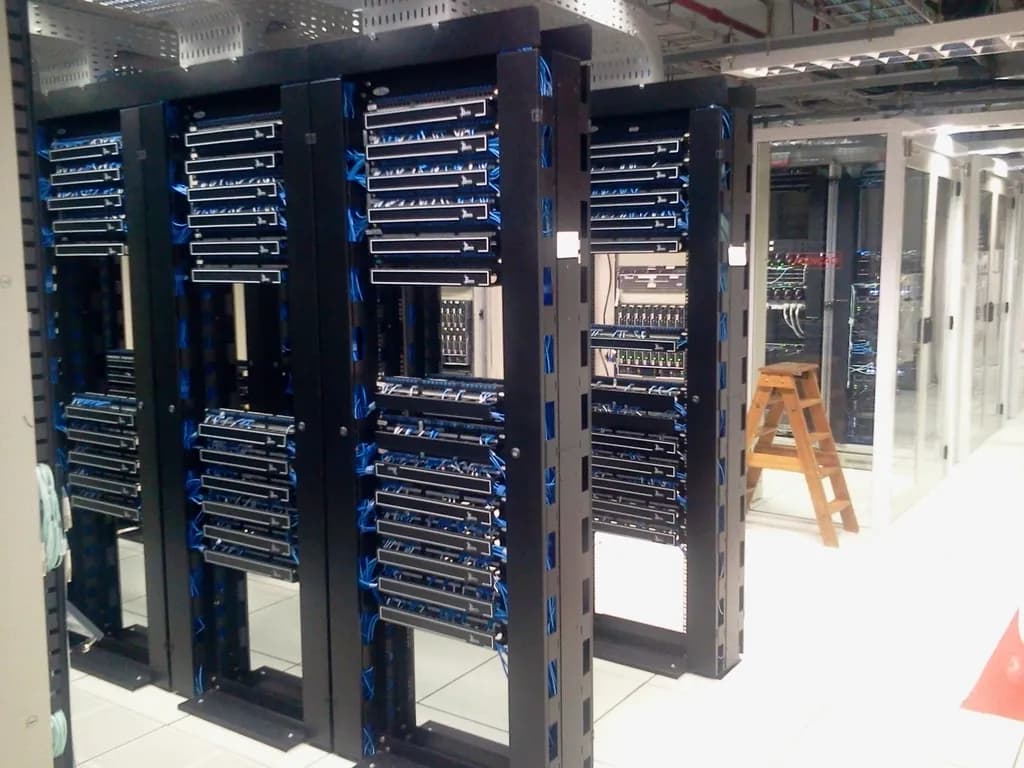
What Is Cloud Hosting and How Does It Work?
A plain guide to cloud hosting: how your site runs across a pool of machines, how pooled resources and scaling work, and the honest pros and cons.

Why small teams ship software faster
A small group of senior engineers ships working software faster than a large one. Here is the mechanism, and how to tell whether your project fits it.

"Unlimited" Hosting, Explained
No hosting plan is unlimited. Here is why hosts use the word, where the caps hide, and how to find them before you buy.

How to Evaluate a Web Host & Pick The Best One
A deep, vendor-neutral checklist for evaluating any web host, with exactly how to test each criterion before you buy and the red flags to watch for.

Shared Hosting vs VPS: When to Make the Switch
Shared hosting vs VPS is a timing question. Here are the signs you have outgrown shared hosting, what changes on a VPS, and how to switch without downtime.

How to Choose the BEST VPS Explained
You picked a VPS. Now size it right: a spec-by-spec guide to CPU, RAM, storage, bandwidth, and the signs you chose too little or too much.

VPS vs Cloud Hosting vs Dedicated Server: How to Choose
VPS, cloud, or dedicated? What each one is, what it costs in money and effort, and how to pick based on traffic, resilience, and budget.

Virtual Machines vs Containers: What's the Difference?
VM vs container, explained without the jargon. How each one isolates your app, the speed and security tradeoffs, and how to pick the right one.
Byte-Level Language Modeling Without a Tokenizer
Why our Veritate models read raw bytes instead of tokens, what the 256-symbol vocabulary costs, and what our 85M and 800M models tell us about the trade.

What Is a VPS? A Beginner's Guide
What is a VPS? How virtualization carves one physical server into private slices, what you get, the honest pros and cons, and who needs one.

Private LLM Hosting: Run Your Own AI Models
Learn how private LLM hosting works, when it beats public AI APIs, and how to evaluate, secure, and migrate a workload to a hosted model.

Which Hosting Type Is Best for Small Websites?
Shared, VPS, or cloud? How to pick the right hosting for a small site, what to evaluate, and the red flags experienced users warn about.
Open Weights and the Future of Private AI
Open-weight models let you run capable AI on hardware you control. Here is why I think that matters more than any leaderboard, for privacy, cost, and independence.
Release Notes 2026.6.1
This update brings a free public AI chat, more capable AI assistants, a much richer object storage experience, and clearer itemized billing.

How to Set Up a WireGuard VPN on Your Server
A practical WireGuard tutorial for Ubuntu: install it, generate keys, write the server config, enable NAT, add a client, and verify the tunnel works.
Hosting, AI, and Software in One Platform
Carpathian is a one-stop IaaS platform: cloud servers, AI, storage, networking, and software development under one account with flat pricing.

AI Inference API: OpenAI-Compatible Endpoints
Learn how inference APIs work, how to migrate, and how to keep your own provider key with a BYOK gateway.
Release Notes 2026.6.0
New usage-based billing means you pay only for what you run, plus Object Storage, per-network bandwidth plans, threat intel feeds, and a refreshed dashboard.
Activation Sparsity for Efficient Inference
You cannot retrofit activation sparsity onto a finished model, but a short, cheap retrain installs it, and the savings compose with weight pruning.

Why the Internet Forgot How to Be Efficient
We ship megabytes of script to display a paragraph of text, and we call it progress. I think we forgot that efficiency was ever a virtue.

Best ChatGPT Alternatives in 2026
Looking for a ChatGPT alternative in 2026? Compare free, private, and self-hosted options.

The Cost of "Free" AI: Who Pays for Inference
Free AI is not a gift. Someone pays for every query, in energy, in data, in dependency. Here is who, and why I'd rather pay honestly for compute I control

What VPS Specs Do You Need to Run a 7B, 13B, or 70B Model?
How much RAM, VRAM, and disk you need to self-host a 7B, 13B, or 70B open-weight model, with cited memory figures and the speed you can expect.
Release Notes 2026.5.0
Version 2025.5 is here. Region-aware dashboard, AI chat with history and markdown, browser RDP/VNC consoles, real in-VM disk usage, tighter security.

How to Deploy a Web App on a VPS with Nginx and Docker
A practical, end-to-end walkthrough to deploy a web app on a VPS with Nginx and Docker on Ubuntu, including HTTPS and keeping it running.

Initial Server Setup and Hardening on Ubuntu
A first-hour checklist for a fresh Ubuntu VPS: non-root sudo user, SSH key auth, UFW firewall, fail2ban, and automatic security updates, with why each step matters.

How to Point a Domain to a VPS and Set Up SSL
Find your VPS IP, create DNS A and AAAA records, write an Nginx server block, and install a free Let's Encrypt certificate with Certbot and auto-renewal.
Release Notes: 2026.4.0.1
Security hardening for 2FA and API keys, SSH gateway lockout on suspicious activity, deployment firewall visibility, and notification history.
Release Notes: 2026.4.0
Carpathian Cloud Version 2026.4.0 is available to all users. Contains many bug fixes, better security, and more granular networking and firewall control.
Release Notes: 2026.3.1
Carpathian Cloud Version 2026.3.1 is now available to all users. Better UI, faster performance, AI models available, and security improvements in this version.

Use AI to Fight Spam, Bots, and Abuse at Scale
Most platforms put AI in front of users. We put it underneath them. Here's how we built a multi-layer AI detection system that users never have to think about.
Release Notes: 2026.1.1
Automated GitHub deployments, API keys, server groups, PII logging, new admin dashboards, and enhanced UI for better cloud management.

React2Shell Explained: Carpathian's Incident Response
CVE-2025-55182 React2Shell: Critical Zero-Day RCE. Real Cyber Attack Analysis and Threat Detection, IOCs, Remediation Steps. React & Next.js Security.

Critical RCE in React Server Components
React2Shell (CVE-2025-55182): Critical RCE in React Server Components. Patch to React 19.0.1+ and Next.js 15.0.5+ immediately.
Release Notes: 2025.12.1
This release includes the introduction of team members, comprehensive security enhancements with improved RBAC, and Spark server package enhancements.

What Are the Different Types of Cloud Hosting?
Choosing the right web hosting can feel overwhelming when you're staring at a dozen options with technical names and unclear pricing.
Vercel Security Incident: What To Know
We are committed to user transparency, so this provides an account of our response to a third-party security vulnerability regarding Vercel React.

Zero Trust Explained for Non-Enterprise Budgets
Zero trust isn't a product you buy. It's a framework, a set of principles you implement. Zero trust operates on a simple assumption: never trust, always verify
Automations That Save Businesses Time
Most small business owners didn't start their company to spend hours on data entry, invoice processing, or copying information between spreadsheets...
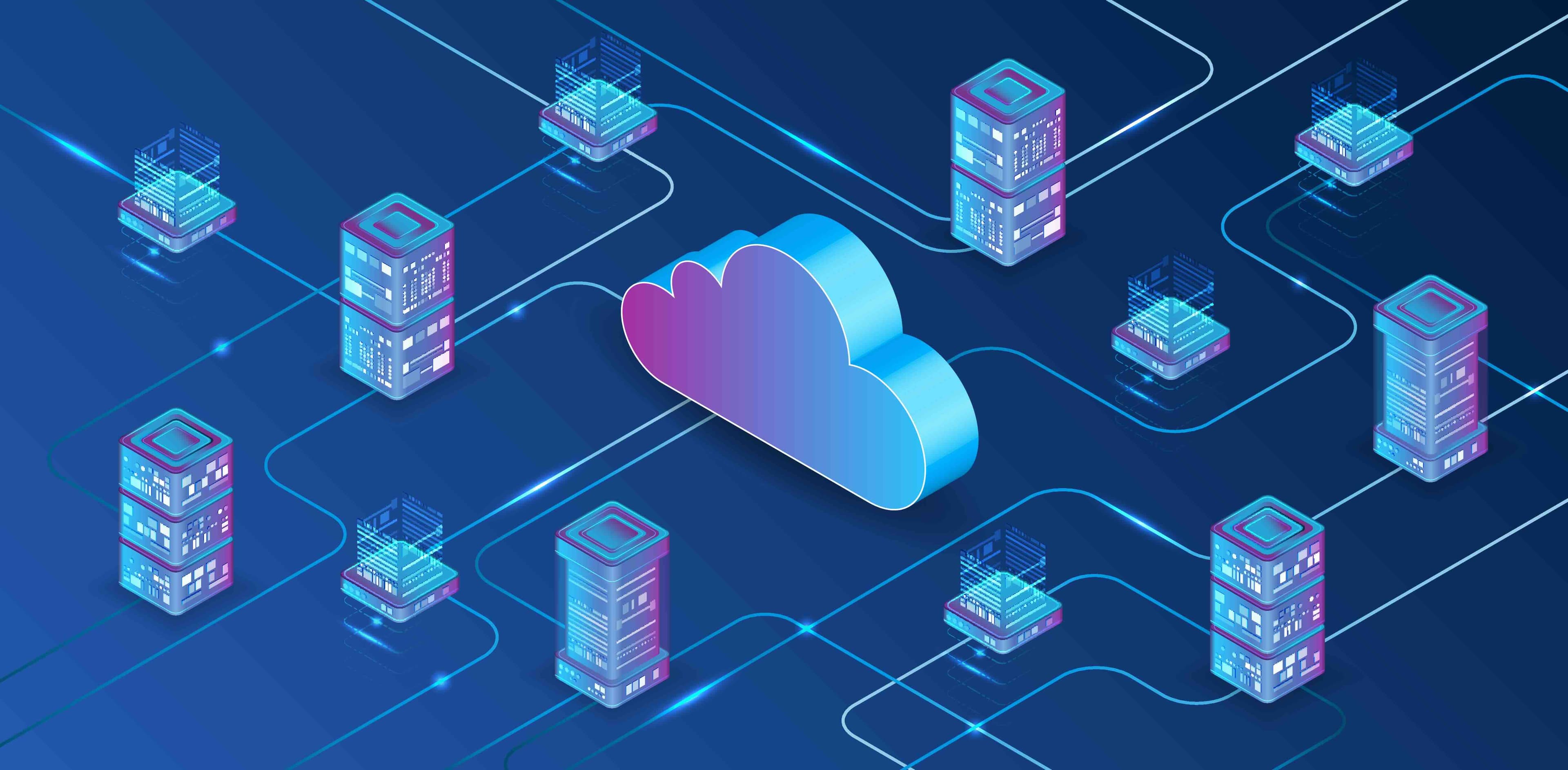
How to Choose the Best Cloud Host in 2026
Your web hosting choice affects everything: how fast your site loads, how secure your customer data stays, and how much you pay each month.
Release Notes: 2025.11.4
This release includes significant enhancements to spark provisioning, security updates across the platform, and general UI improvements.

Can you Host Your Website on the Cloud?
Can you Host Your Website on the Cloud? Hosting your website on the cloud g has become the fastest growing segment of the web hosting market.
Cybersecurity Most Businesses Skip (And Why They Shouldn't)
Small business owners wear a lot of hats. Marketing, sales, operations, HR. Cybersecurity rarely makes the priority list until something goes wrong.

AI Cyber Warfare for Enterprise
Our guidance draws from government cyber warfare operations, financial sector offensive security, and enterprise vulnerability assessments.
Is Hosting with Carpathian Free?
Every Carpathian account includes a free cloud server, web hosting, and database that you keep forever. No trial period and no credit card required to start.

Cloud Server vs Web Server in 2026
This guide examines the architectural differences, performance characteristics, security implications, cost structures, and strategic considerations that define cloud servers versus web servers in 2026.

Best Hosting Type for Small Websites
If you're launching a personal blog, portfolio, small business site, or a simple online presence, you don't need enterprise infrastructure.

Rethinking AI Thinking
Can artificial intelligence truly think, or is it simply an extraordinarily sophisticated pattern-matching system? The people who succeed in the AI era won't be those who blindly adopt every new AI tool or those who resist all AI assistance. They'll be the ones who understand exactly what AI can and cannot do.
People of the Internet: Why Sponsor Our Own Podcast
People of the Internet started as a way to connect with other entrepreneurs and creatives building things online. Now, as Carpathian launches its formal sponsorship program, supporting this kind of community-driven content is a natural extension of our commitment to fostering innovation and connection in the technology space.

Sponsorship For Open Source Developer: Dhanush Nehru
Carpathian announces the official launch of its technology sponsorship program and welcomed Dhanush Nehru as its first individual sponsorship partner.
Release Notes: 2025.11.3
This release includes major design overhauls across the platform, a refined mobile experience, cloud server upgrade capabilities, improvements to the publications page, improved pricing page, and enhanced security across the platform.
AI Infra Alternative to Big Tech
Own your infrastructure, not rent it forever. Carpathian provides AI cloud solutions and custom software development with predictable costs.
Release Notes 2025.11.2
We’ve gone through and enhanced a lot of the overall experience with optimizations for mobile viewing.
The Death of the Internet
Carpathian's founder explores how Big Tech consolidation and corporate control are reshaping the web and why decentralized, sustainable technology matters.
Release Notes: 2025.11.1
We've completely rebuilt user management with organizations, overhauled security, and simplified how you pay for what you use.
Release Notes: 2025.10.1
Consolidated application versioning, redesigned parking server with custom templates, enhanced domain dashboard with improved bot detection and cleaner metrics.

Latest App Scaling Techniques for 2026
App scalability has become requirement for enterprise success in 2026. Organizations must implement proven scaling strategies that maintain performance.

Data Security for Iowa Businesses
Data security best practices for cloud-based businesses in Des Moines, Cedar Rapids, Iowa City, and across Iowa. Protect your business from cyber threats.

Building A Better, More Sustainable Cloud
How Carpathian is transforming cloud infrastructure with transparent pricing, true ownership, and customer-focused innovation that challenges traditional cloud providers.

Cloud Data Encryption Guide
Learn essential cloud encryption strategies, secure key management practices, and proven data protection techniques to safeguard your infrastructure deployments
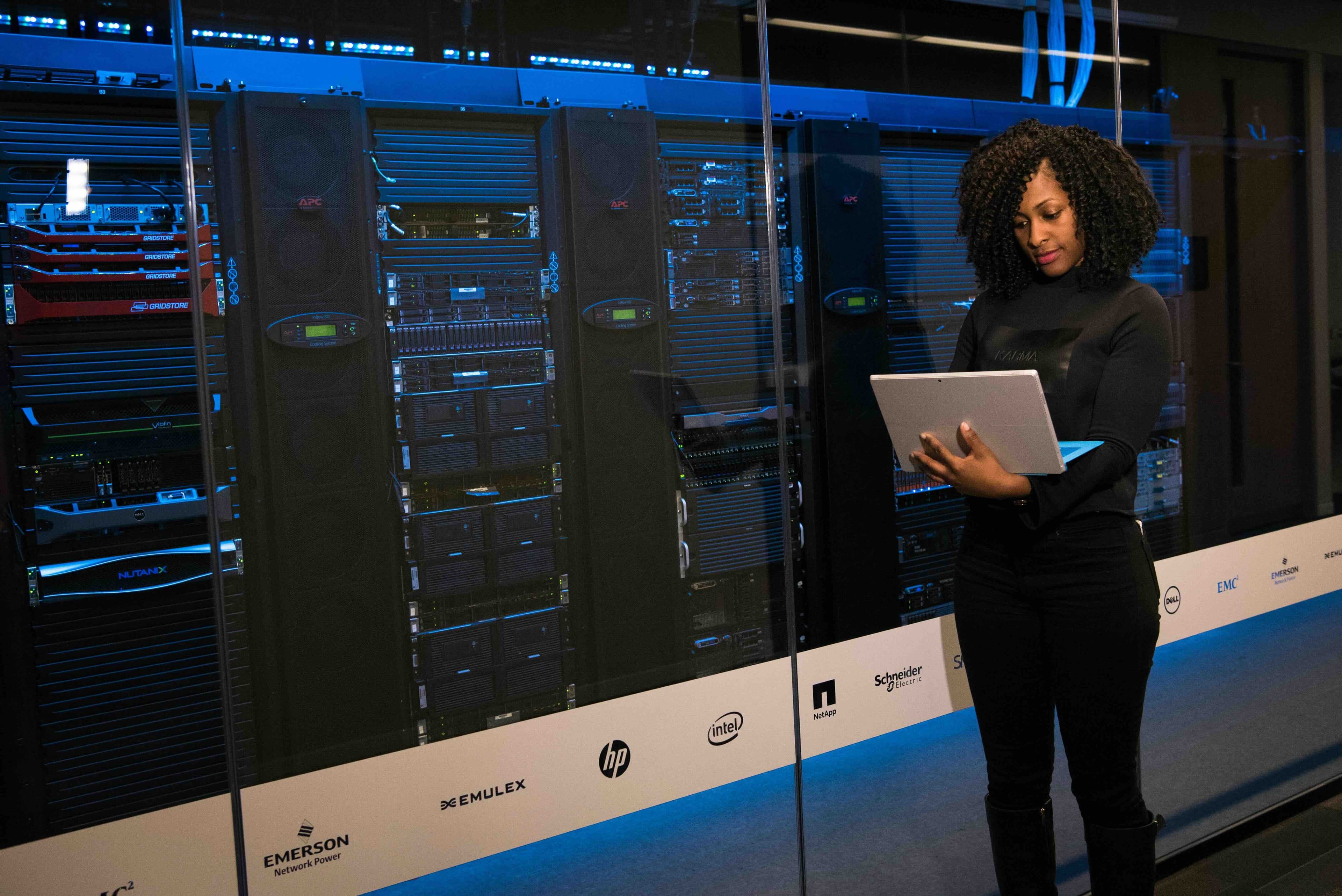
The Carpathian Architecture
Discover why Carpathian built its entire cloud infrastructure from scratch instead of relying on AWS or Azure. Learn about our approach to ownership.

Scaling High-Traffic Apps
Build applications that handle millions of users. Architecture patterns, infrastructure decisions, and performance optimization for high-traffic apps.

Legacy Software Risks & Solutions
Outdated enterprise software drains budgets and creates security risks. Identify legacy system vulnerabilities and practical modernization strategies.
AI Software Development Services
Professional AI software development services that integrate artificial intelligence into custom business applications. From automation to predictive analytics, we build AI solutions that solve real business problems.